

Advancing the Study of a Mitochondrial Molecule That Helps Cells Survive Low Oxygen
Mitochondria, often called the powerhouses of cells, contain a molecule that may help cells continue producing energy when oxygen is scarce. The laboratory of Jessica Spinelli, PhD, at UMass Chan Medical School identified rhodoquinone (RQ) as a previously unrecognized component of the mammalian electron transport chain.

In a new study published in the Journal of Lipid Research, the Spinelli lab developed analytical standards that allow scientists to identify and precisely measure RQ in tissue. The advance provides researchers with essential tools to better understand where RQ is found, how much is present and how it functions in mammalian metabolism.
The lab's original discovery challenged long-standing assumptions about how mammalian cells generate energy and could inform research into heart attacks, strokes and other oxygen-starved conditions, including cell replacement therapies for type 1 diabetes.
A Detour When Oxygen Is Scarce
The electron transport chain inside mitochondria moves electrons through a series of reactions that generate energy. Under normal conditions, ubiquinone (UQ) helps deliver those electrons to oxygen.
When oxygen becomes limited—a condition known as hypoxia—the usual pathway can become blocked. The Spinelli lab discovered that some mammalian tissues contain RQ, which redirects electrons to fumarate instead of oxygen, allowing energy production to continue when oxygen is in short supply.
"Imagine your usual commute has construction traffic," said Dr. Spinelli, Assistant Professor of Molecular Medicine at UMass Chan Medical School. "RQ acts like a detour route and keeps traffic flowing so your mitochondria don't grind to a halt during oxygen shortages."
Measuring a Newly Discovered Molecule
While discovering RQ was an important first step, scientists also needed a reliable way to measure it.
In their latest publication, the Spinelli lab developed purified analytical standards for two forms of RQ—RQ-9, found primarily in mice, and RQ-10, the form more abundant in humans. These reference standards enable researchers to accurately identify and quantify RQ in tissues, making it easier to compare findings across experiments and laboratories while opening new opportunities to investigate the molecule's role in health and disease.
A method to synthesize analytical rhodoquinone standards for quantitative analysis in tissue specimen
Improving the Survival and Function of Transplanted Islets
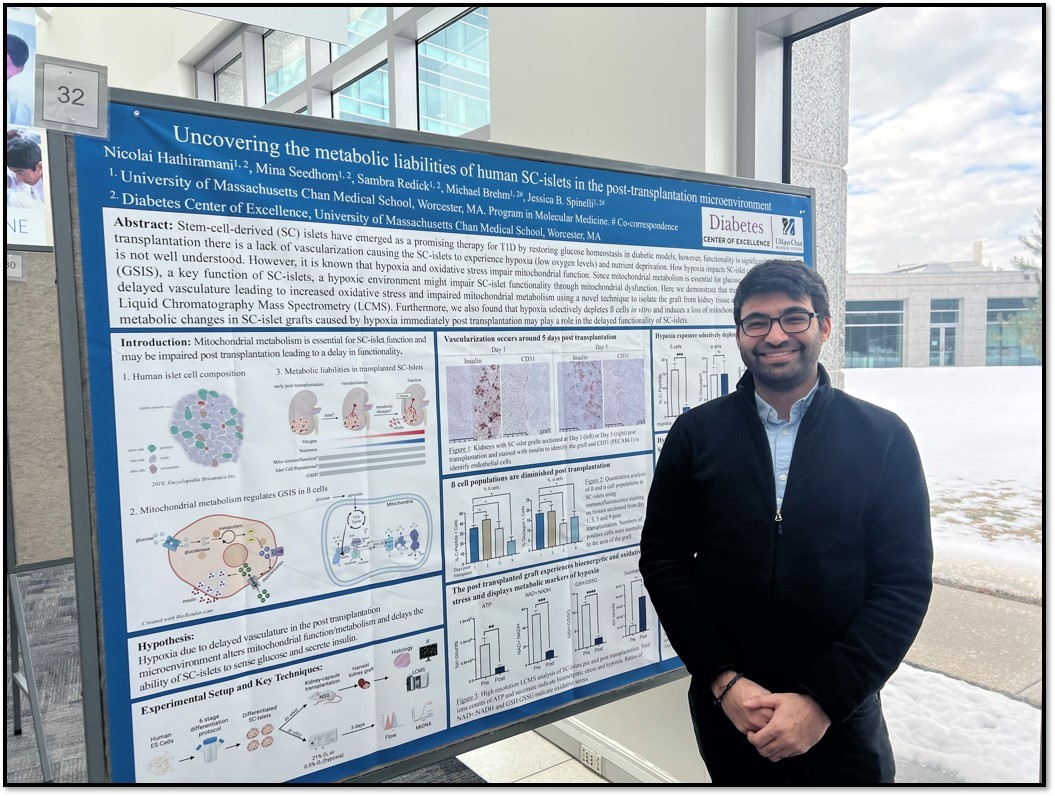
The Spinelli lab is also investigating whether mitochondrial pathways can be reprogrammed to help transplanted insulin-producing stem cell-derived islets withstand periods of low oxygen. These studies are led by Nicolai Hathiramani, a PhD candidate working in both the Spinelli and Brehm laboratories who has lived with type 1 diabetes since he was diagnosed as a toddler.
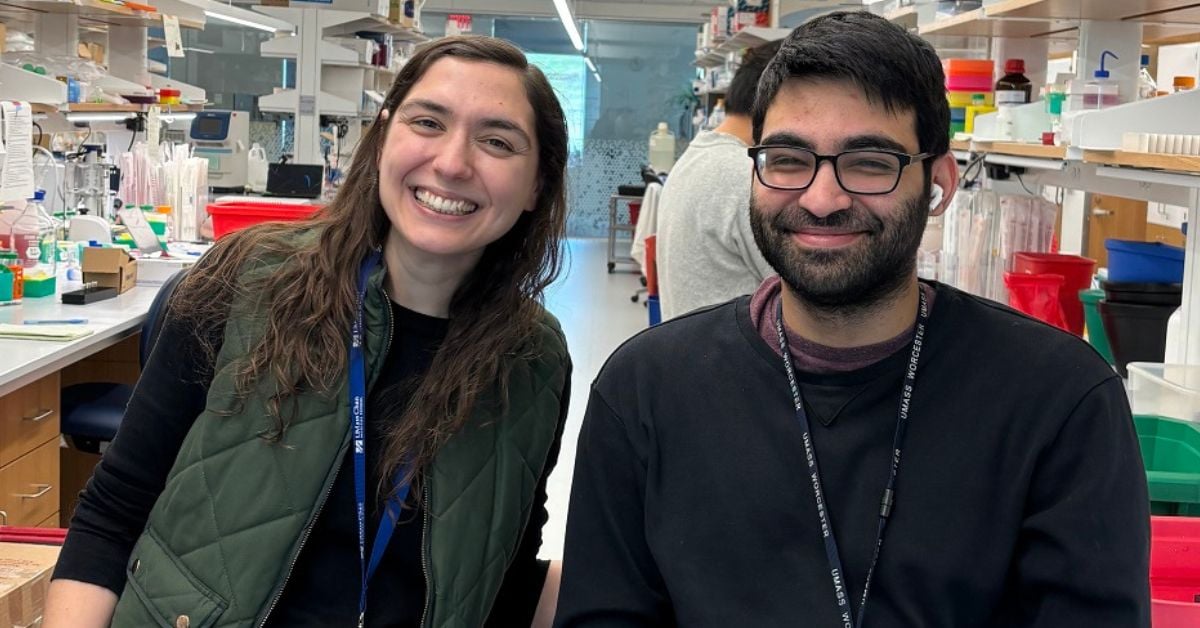
Following transplantation, islets can initially lack an adequate blood supply, creating metabolic stress and mitochondrial dysfunction. Islet transplantation in the Brehm lab’s humanized models of type 1 diabetes has impacted mitochondrial health and function within the transplanted islets. Hathiramani is exploring whether modifying the electron transport chain before transplantation could make the cells more resistant to hypoxia and improve their survival and function.
"We're learning to reprogram cells' energy systems as if we're providing them a backup generator when the power goes out," said Dr. Spinelli. "We believe the ability to reprogram the electron transport chain presents a novel therapeutic strategy to alleviate hypoxia-induced tissue damage."